


Street art in King’s Lynn is not a Banksy
A piece of artwork that has gained attention in Lynn is not a Banksy, officials have confirmed.
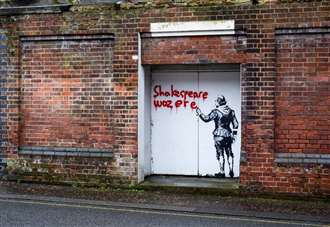
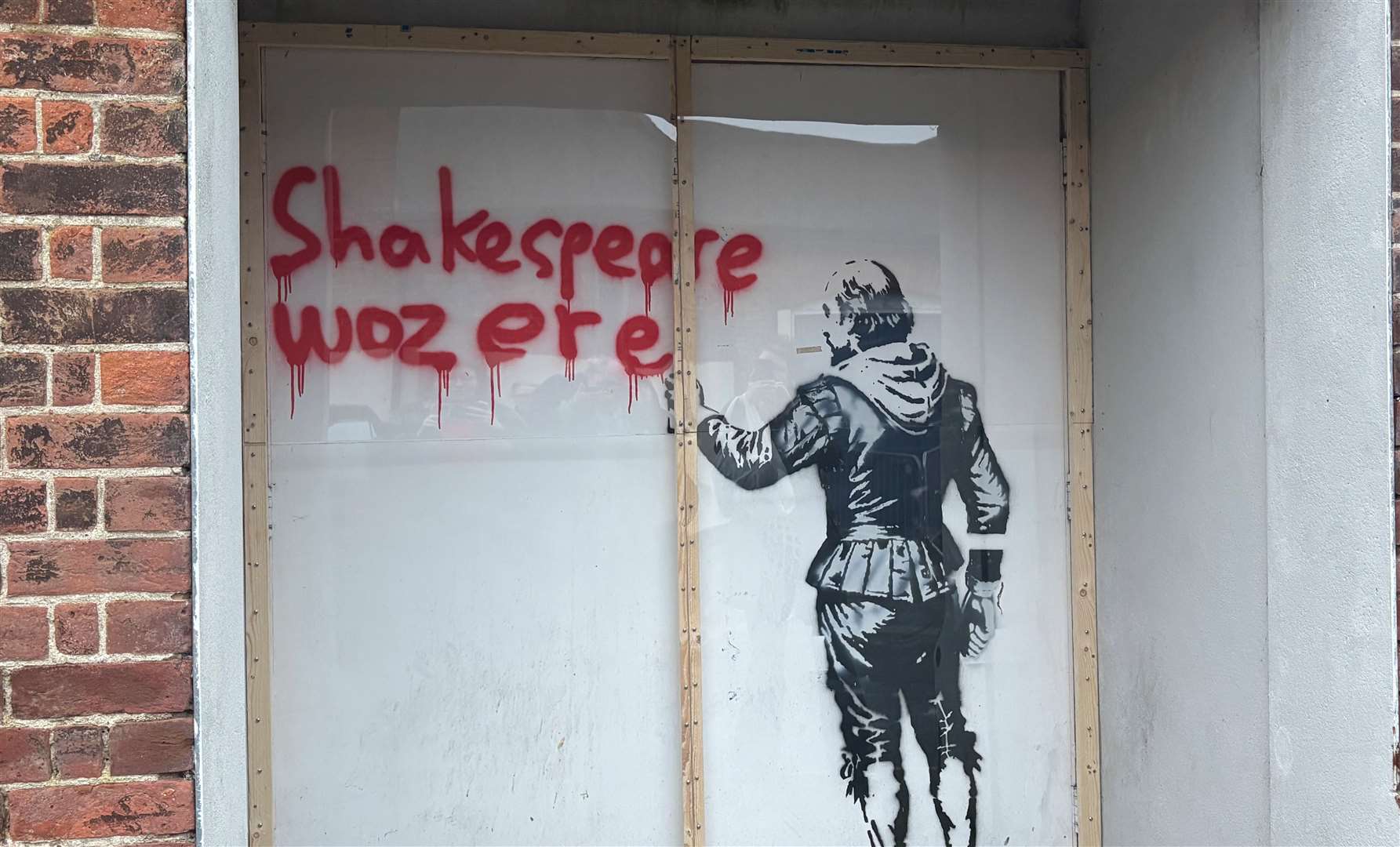
The artwork, depicting William Shakespeare holding a tin of spray paint, was discovered on a set of white doors on Ferry Street yesterday morning.
Questions were asked whether the world-famous anonymous artist made his second visit to West Norfolk, with protections put in place in case it was a legitimate Banksy painting.
However, the street artist’s press office has since confirmed that the piece is not a Banksy.
A spokesperson for Banksy’s press office said: “This work is not by the artist Banksy. Sorry to disappoint you on this occasion.”
Normally, the artist posts his work on social media platforms and his website within a few days of creating it.
“Shakespeare woz ere” is written in red next to the picture of the famous writer, who is believed to have performed in the town.
The news now sparks the question: Who did complete the artwork?
West Norfolk Council installed a protective screen over the piece yesterday afternoon.
This morning, a security guard was monitoring the piece in a nearby parked car.
Banksy last paid a visit to West Norfolk in 2021, when he posted a social media video showing that his works around the area were genuine.
Shakespeare is believed to have performed at St George’s Guildhall in Lynn between 1592 and 1593 when the plague closed London theatres.
As the UK’s oldest working theatre, the site recently exposed 15th-century floorboards and a 600-year-old door, likely used as a “tiring house” or dressing room by the Bard.
_pluginManager.setTargetValue(“articleID”, “9452031”);
Source: www.lynnnews.co.uk